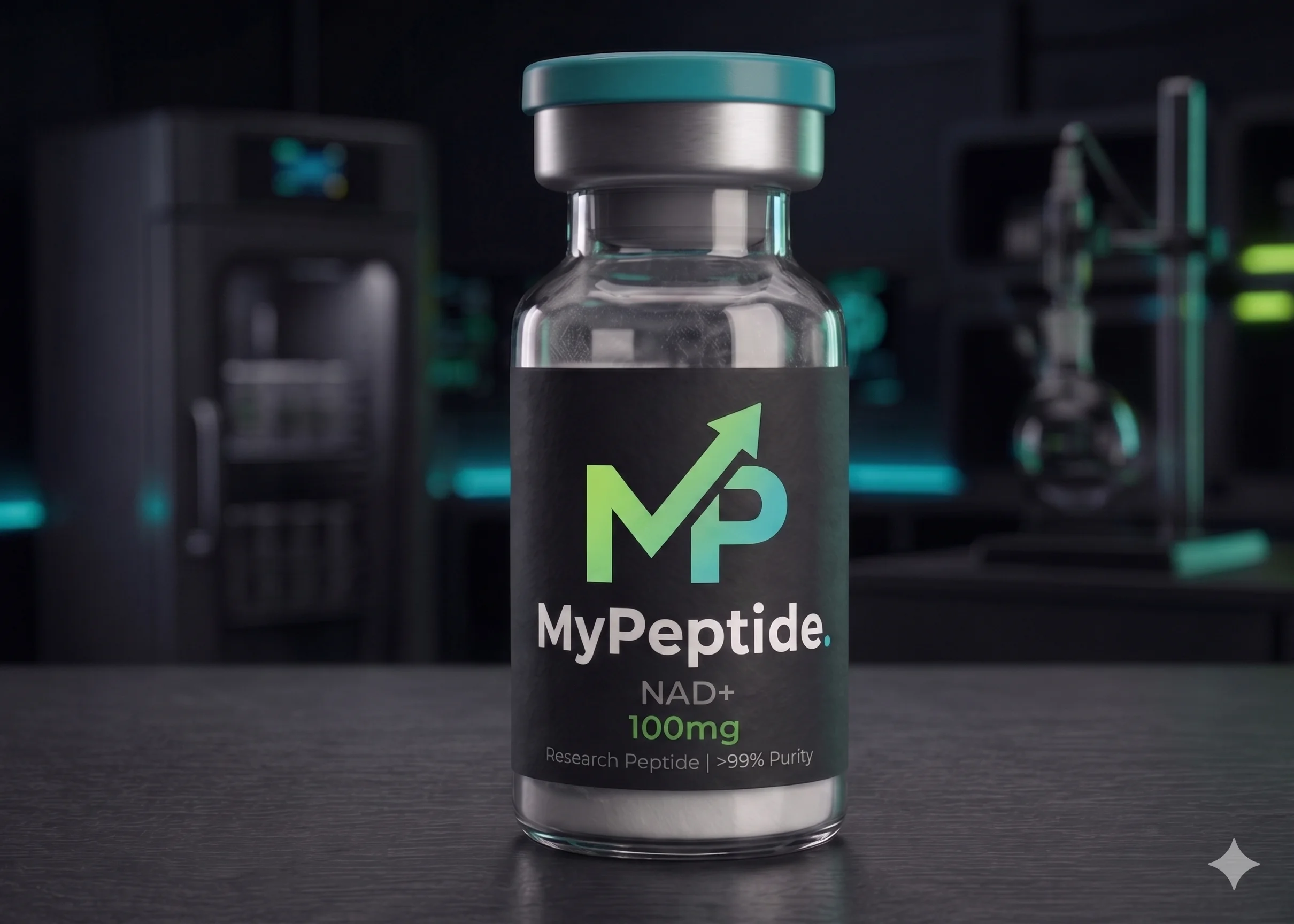
NAD+ 100mg (Nicotinamide Adenine Dinucleotide) is an essential coenzyme involved in over 500 enzymatic reactions in human cells. Central to mitochondrial energy metabolism and the regulation of longevity enzymes (sirtuins, PARP), it is the subject of intensive research on cellular aging, neuroprotection, and metabolic recovery.
Fundamental biological role
NAD+ is an essential cofactor of the mitochondrial respiratory chain (complexes I to IV) and the Krebs cycle. Its cellular levels naturally decline with age—up to 50% reduction for those between 40 and 60 years old according to several studies. This depletion is associated with mitochondrial dysfunction, cognitive decline, and increased susceptibility to metabolic diseases.
Main research avenues
- Sirtuins (SIRT1-7) NAD+ is the obligatory substrate of sirtuins, NAD+-dependent deacetylases involved in epigenetic regulation, DNA repair, and mitochondrial biogenesis.
- PARP1/2 : DNA repair enzymes that consume NAD+, activated by double-strand breaks
- CD38/CD157 NAD+ consuming glycohydrolases, overexpressed with age — target for preserving NAD+ levels
- Tryptophan metabolism Kynurenine pathway — endogenous biosynthesis of NAD+ from dietary tryptophan
Technical specifications
- Purity ≥99% — oxidized form (NAD⁺), not reduced
- Molecular formula: C₂₁H₂₇N₇O₁₄P₂ — Molecular weight: 663.43 g/mol
- Freeze-dried form — hygroscopic, to be kept sealed at -20°C
- Aqueous solubility: excellent (>100 mg/mL)
- Certificate of Analysis (COA) per production batch
Storage and handling
NAD+ is sensitive to humidity and heat. Store at -20°C in a dry atmosphere. After reconstitution, use within 24 hours or aliquot and refreeze immediately. Do not expose to extreme pH levels (unstable in alkaline environments). Handle with gloves to avoid enzymatic contamination.
Shipping
Discreet shipping in 2 to 5 business days in the EU countries served (overseas territories and Norway: longer delivery time, list of destinations). Thermally protected packaging. Product intended exclusively for scientific research.
Frequently Asked Questions about NAD+ 100 mg
What is NAD+ and why is it important in research?
NAD+ (Nicotinamide Adenine Dinucleotide) is an essential coenzyme in over 500 enzymatic reactions. A cofactor of sirtuins (epigenetic regulation) and PARP1 (DNA repair), its levels decline by approximately 50% between the ages of 40 and 60. It is central to research on cellular aging, mitochondrial biogenesis, and neuroprotection.
How to store lyophilized 100mg NAD+?
NAD+ is hygroscopic and heat-sensitive. Store at -20°C in a sealed bottle under a dry atmosphere. After reconstitution in sterile water, use within 24 hours or aliquot and refreeze immediately. Do not expose to alkaline pH (rapid degradation). Handle with gloves.
What is the difference between NAD+, NMN and NR in research?
NAD+ is the final active form. NMN (Nicotinamide Mononucleotide) and NR (Nicotinamide Riboside) are biosynthetic precursors that are converted to intracellular NAD+. For direct research on NAD+-dependent pathways, NAD+ is the reference form. NMN and NR exhibit better oral bioavailability in in vivo studies.
Saïd –